Why We Discontinued Our Cod Liver Oil
We discontinued our Cod Liver Oil after the supplier changed the capsule formulation and we could no longer verify the finished product to the halal standard we require. Here is what changed, why we stopped stocking it and what we offer instead.
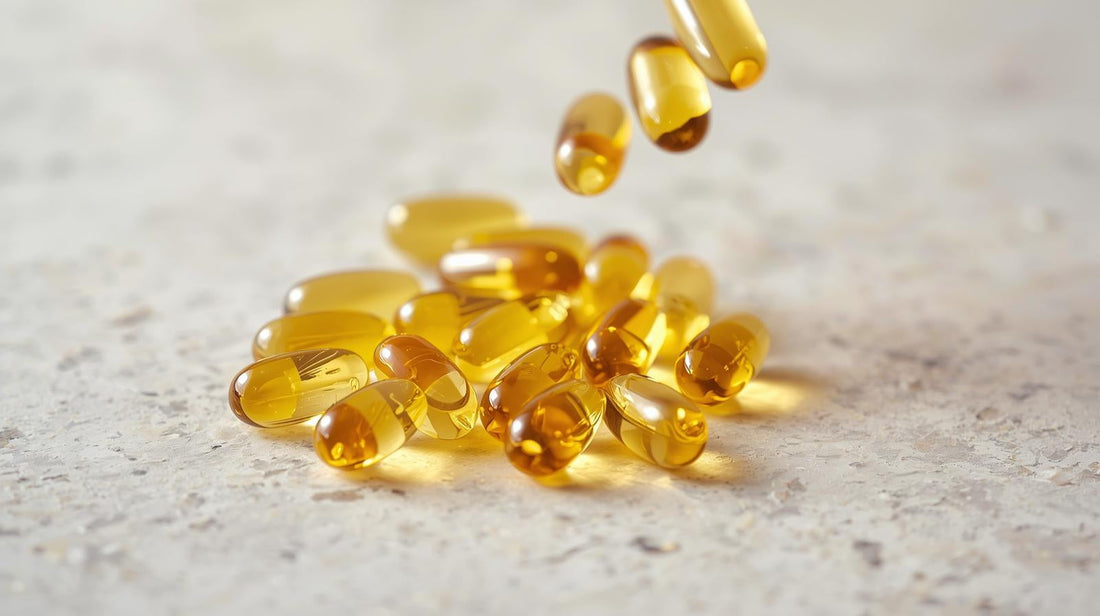
For a long time, Cod Liver Oil was one of the products we stocked at Khan Nutrition.
Then the supplier changed the formulation.
The new version used a bovine gelatine capsule shell, and we could no longer obtain the assurance we needed to verify the finished product to our halal standard.
So we stopped selling it.
The product was popular, but popularity is not enough reason for us to continue stocking something when one of our core standards can no longer be confirmed.
The short version
The supplier changed the Cod Liver Oil capsule formulation.
The revised product used a bovine gelatine shell.
We were not able to verify the new finished formulation to the halal standard we require.
Rather than sell it with uncertainty, we discontinued it.
We now stock Omega 3-6-9 Oils, which is a different formulation and is formally halal-certified.
It is not a like-for-like replacement, and we do not describe it as an "upgrade". It is simply the omega product we are currently comfortable offering.
What changed?
The change came from the supplier.
The revised specification replaced the previous capsule-shell system with a bovine gelatine shell.
Bovine gelatine is not automatically unsuitable from a halal perspective. Its permissibility depends on factors including the source of the material and how it has been produced.
The issue for us was that we could no longer obtain enough assurance about the new finished formulation to verify it to the standard we expect.
That distinction matters.
We did not discontinue the product simply because the word "bovine" appeared on the specification.
We discontinued it because we could no longer verify the product properly.
Why not keep selling it until there was a problem?
Because that would put the decision the wrong way around.
Our standard is not:
sell the product unless someone proves there is a problem.
It is:
understand what we are selling well enough to be comfortable putting Khan Nutrition's name behind it.
That includes looking at the full formulation, capsule materials and other ingredients, and asking suppliers for clarification where necessary.
If the information available does not give us enough confidence, we would rather not stock the product.
Does every Khan Nutrition product have formal halal certification?
No.
There is an important difference between something being halal and something having a formal halal certificate.
Formal certification can be valuable, and some products we stock do have it.
But certification is not the only way a product can be assessed.
For products without formal certification, we review the formulation and relevant supplier information so that we can make an informed decision about whether we are comfortable stocking it as halal.
If we cannot obtain enough assurance, we do not think it is appropriate to simply assume.
That is what happened here.
What if I bought the previous Cod Liver Oil?
This decision concerned the revised supplier formulation and what we were prepared to stock going forward.
We are sharing the reason publicly because customers should be able to understand why a familiar product disappears from the range rather than being left to guess.
We also think changes like this are worth explaining because they show why supplement products cannot always be judged from the front of the label alone.
Formulations can change.
Capsule shells can change.
Suppliers can change ingredients or manufacturing details.
When something relevant changes, we need to reassess the product rather than assuming yesterday's decision still applies today.
What do you offer instead?
Our current omega product is Omega 3-6-9 Oils.
It contains a blend of fish oil, flaxseed oil and sunflower oil and is formally halal-certified.
It is important to be clear that this is not the same formulation as Cod Liver Oil.
Cod Liver Oil and Omega 3-6-9 have different ingredients and different fatty-acid profiles.
So we do not describe Omega 3-6-9 as a superior version, a direct replacement or an upgrade.
It is simply the current omega supplement that meets the standards we are comfortable with.
If you want to understand the different types of omega fatty acids before deciding whether a supplement is useful for you, you can also read:
Omega 3, 6 and 9: What Are They and Do You Need All Three?
Why explain all this?
Because trust is easier to lose than it is to build.
Supplement brands sometimes talk a lot about quality when everything is going well.
We think the more meaningful test is what happens when a popular product no longer meets the standard expected of it.
In this case, the answer was straightforward.
We stopped selling it.
Not because Cod Liver Oil suddenly became a bad ingredient.
Not because the replacement product was better.
And not because we wanted a new marketing story.
We stopped because the formulation changed and we could no longer verify the product in the way we needed to.
That is enough reason for us.
Last reviewed: September 2026